Ardista Script: The Graceful Font for Timeless Designs
There is a specific type of elegance that doesn't scream for attention but rather whispers with confidence. In the world of modern typography, finding a typeface that balances this quiet confidence with practical usability is rare. Ardista Script is one such premium font that manages to strike this balance perfectly. It is a thin-lettered, graceful script font designed not just to be seen, but to be felt. Its flowing curves and sophisticated baseline make it an instant favorite for anyone looking to inject a sense of romance and refinement into their work. Whether you are a seasoned graphic designer or a small business owner dabbling in DIY branding, understanding how to leverage this typeface can elevate your visual communication significantly.
The Visual Personality of Ardista Script
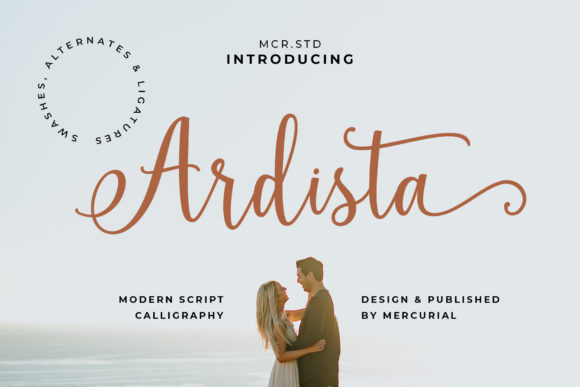
At first glance, Ardista Script feels delicate, but upon closer inspection, you realize it possesses a strong structural integrity. It is not a handwritten font in the messy, casual sense; rather, it is a polished script font that mimics the fluidity of high-end calligraphy. The defining characteristic here is the "thin lettering." In typography, weight matters. A heavy, blocky font implies stability and strength, whereas a thin, airy font like Ardista implies luxury, lightness, and exclusivity. This makes it a fantastic display font for headers and logos where you want to establish a mood of sophistication immediately.
The "ravishing style" mentioned in its description is evident in the swashes and ligatures. These are the extra tails and connections between letters that give script fonts their movement. Because Ardista Script is PUA encoded, you have complete access to these design assets. For the non-designer, PUA encoding is a lifesaver—it means you don't need advanced software to access the fancy alternate characters. You can use Character Map on Windows or Font Book on Mac to copy and paste specific glyphs. This allows you to customize the tail on a "y" or the crossbar on a "t" to fit the specific space you are working with, giving your work a custom, bespoke look without the custom price tag.
Where Ardista Script Shines Brightest
Understanding the personality of the font helps us identify its best use cases. Because Ardista is so graceful, it thrives in environments where emotion and aesthetics take precedence over raw data density. It is a creative font that bridges the gap between digital and physical media beautifully.
- Wedding Invitations and Stationary Art: This is the font's home territory. The thin strokes and romantic flair are perfect for the bridal market. It looks stunning on textured cardstock, foil-stamped headers, and envelope addressing. If you are a stationer, pairing Ardista with a clean sans serif font for the body text creates a timeless hierarchy.
- Logo Design and Brand Identity: For boutique brands—think florists, jewelry designers, high-end cafes, or lifestyle coaches—Ardista offers a distinct voice. Using it in logo design helps establish a brand identity that feels personal and human. It tells the customer that the brand values beauty and detail.
- Social Media Graphics: In the fast-scrolling world of Instagram and Pinterest, a beautiful quote overlay can stop a thumb. Ardista works exceptionally well for inspirational quotes, sale announcements for fashion brands, or headers on blog promotion graphics. Its elegance stands out against the noise of standard web fonts.
- Packaging Design: If you are selling artisanal goods, candles, or chocolates, the packaging needs to reflect the quality inside. Ardista Script adds a layer of perceived value to packaging design, making a product feel more expensive and giftable.
Strategic Typography: Pairing and Hierarchy
One of the most common mistakes in design is using a script font for everything. While Ardista Script is readable, it is best used as a display font—for titles, headers, and short bursts of emphasis. If you use it for long paragraphs, you risk fatiguing the reader's eye. The real magic happens when you practice font pairing.
To get the most out of Ardista, pair it with a typeface that offers contrast but not competition. A geometric sans serif font (like Montserrat or Poppins) provides a clean, modern backdrop that allows the swashes of Ardista to breathe. Alternatively, if you want a more editorial, magazine-style look, pairing it with a classic serif font (like Garamond or Playfair Display) creates a sophisticated, high-fashion aesthetic. This contrast creates visual hierarchy, guiding the viewer's eye naturally from the headline to the sub-header and finally to the body copy.
When evaluating your project fit, consider the medium. In web design, ensure that the font size is large enough to render the thin strokes clearly on lower-resolution screens. In editorial design, such as magazine layouts or book covers, Ardista can be kerned (spaced) slightly wider to give it an airy, luxurious feel. For social media graphics, high contrast is key, so ensure your Ardista text is placed over a solid color or a blurred background to maintain readability.
Practical Application and Professional Polish
For entrepreneurs and marketers, consistency is the bedrock of a strong brand. When you adopt Ardista Script as part of your toolkit, you are committing to a specific visual language. To maintain professionalism, establish rules for how this font is used. Perhaps Ardista is only used for the main logo and the "Hero" section of your website, while a standard serif font handles the blog text. This consistency builds brand recognition over time.
From a licensing perspective, because Ardista is a commercial font, it is vital to ensure you have the correct license for your usage. If you are a designer creating a logo for a client, the client usually needs their own license to install the font on their computers for future edits. Always read the license agreement regarding commercial font usage to avoid legal headaches down the road.
Ultimately, Ardista Script is more than just a collection of letters; it is a tool for storytelling. It allows content creators, crafters, and business owners to communicate with a level of grace that standard system fonts simply cannot achieve. By utilizing its PUA encoding to access unique glyphs, pairing it intelligently with contrasting typefaces, and applying it to the right contexts—be it a wedding invite or a website header—you can harness the power of modern typography to make your projects truly gorgeous.