Monicha Script: A Typeface That Whispers Luxury and Confidence
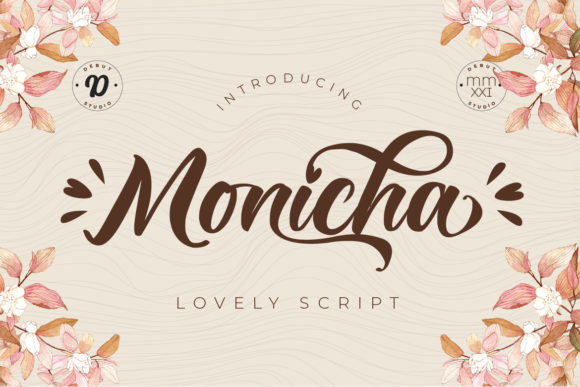
There’s a particular moment in design when a font doesn’t just sit on the page—it performs. It catches the light, holds attention, and communicates something deeper than the words it forms. Monicha Script is that kind of typeface. It’s a premium script font that feels both timeless and contemporary, with a flowing, cursive style that carries an unmistakable air of refinement. But its real strength isn’t just in looking elegant; it’s in how it makes a design feel—confident, intentional, and deeply personal.
The Anatomy of Elegance: What Makes Monicha Script Special
At its core, Monicha Script is a display font designed for impact. Its letterforms are crafted with smooth, connected strokes that mimic natural handwriting, yet they maintain a consistent rhythm and balance that feels polished rather than casual. The contrast between thick and thin strokes is subtle, giving it a delicate, sophisticated texture that avoids looking overly ornate or fussy.
What truly sets it apart are its stylistic alternates and ligatures. These aren’t just decorative extras—they’re essential tools for creating truly custom typography. Swash alternates allow you to extend or modify the tail of a letter, giving headlines a more dramatic or personalized flair. Ligatures seamlessly connect specific letter pairs (like “st” or “tt”) so they flow as a single, unbroken unit, which enhances readability and visual harmony. For a designer, this level of control means you can adapt the font’s personality to fit a wide range of moods—from romantic and whimsical to bold and authoritative.
Where Monicha Script Truly Shines: Real-World Applications
This isn’t a font that wants to be everywhere. It’s a strategic choice, best used where personality and tone are paramount. Think of it as a specialist in your design assets toolkit, not a workhorse for body copy.
Branding and Identity
For logo design, Monicha Script can be transformative. It immediately signals luxury, craftsmanship, and attention to detail. Imagine it for a boutique hotel, a high-end florist, a bespoke jewelry brand, or a premium skincare line. It works beautifully as a primary logotype or as a complementary wordmark alongside a simpler sans serif font or serif font. The key is to use it for the brand name or a key tagline, not for every piece of text. Its strength is in creating a memorable brand identity that feels exclusive and curated.
Packaging and Print Design
In packaging design, this creative font excels at drawing the eye to the product name or a special feature. On a wine label, a gourmet food package, or a luxury candle, it adds a tactile, artisanal quality. For editorial design—like magazine headers, chapter titles, or pull quotes—it introduces a moment of visual poetry that breaks up dense layouts and guides the reader’s eye.
Digital and Social Media
On screen, Monicha Script demands careful use. Its intricate details can become muddy at very small sizes or on low-resolution displays. However, when used judiciously in web design for a hero section headline, a navigation menu accent, or a button label, it can elevate a digital experience. It’s particularly powerful for social media graphics—Instagram quotes, announcement banners, or story highlights—where a single, impactful headline needs to stop the scroll and convey a specific aesthetic instantly.
Practical Guidance: Working with Monicha Script
Choosing a premium font like this is an investment. Here’s how to approach it thoughtfully.
Evaluate the Fit: Before you commit, consider your project’s core message. Does it call for warmth, sophistication, and a human touch? Monicha Script is ideal for brands and projects in the fashion, beauty, lifestyle, wedding, and artisanal food spaces. It might feel out of place for a tech startup or a financial institution aiming for a stark, minimalist vibe.
Master the Pairing: This is critical. Monicha Script is a star performer, but it needs supporting actors. Pair it with a clean, neutral serif font for body text in print, or a geometric sans serif font for digital interfaces. The contrast allows the script to pop without overwhelming the viewer. Avoid pairing it with other highly decorative or handwritten fonts, as this creates visual chaos.
Explore the Full Family: Don’t just look at the standard glyphs. Dive into the OpenType features. Test the stylistic alternates and ligatures in your design software. See how changing a single “g” or “y” can alter the entire feel of a word. This is where the font’s true versatility lies.
Test for Readability: Always test your headline or logotype at the intended size and in the intended medium. Zoom in to check how letterforms connect. Ensure the text remains legible against its background, especially in web design where contrast ratios matter for accessibility.
Understand the License: As a commercial font, its license dictates how you can use it. Verify that the license covers your intended use—whether for a client’s logo, printed merchandise, or a website. This is a fundamental step in professional practice that protects both you and your client.
The Final Word: More Than Just a Font
Monicha Script is a testament to how modern typography can be both an art and a tool. It’s not about following a trend; it’s about selecting a typeface that aligns with a story. When used with intention and restraint, it does more than spell out words—it builds atmosphere, evokes emotion, and creates a lasting impression. For the designer, entrepreneur, or creator, it’s a way to inject a signature level of elegance and professionalism into a project, making the ordinary feel distinctly special.